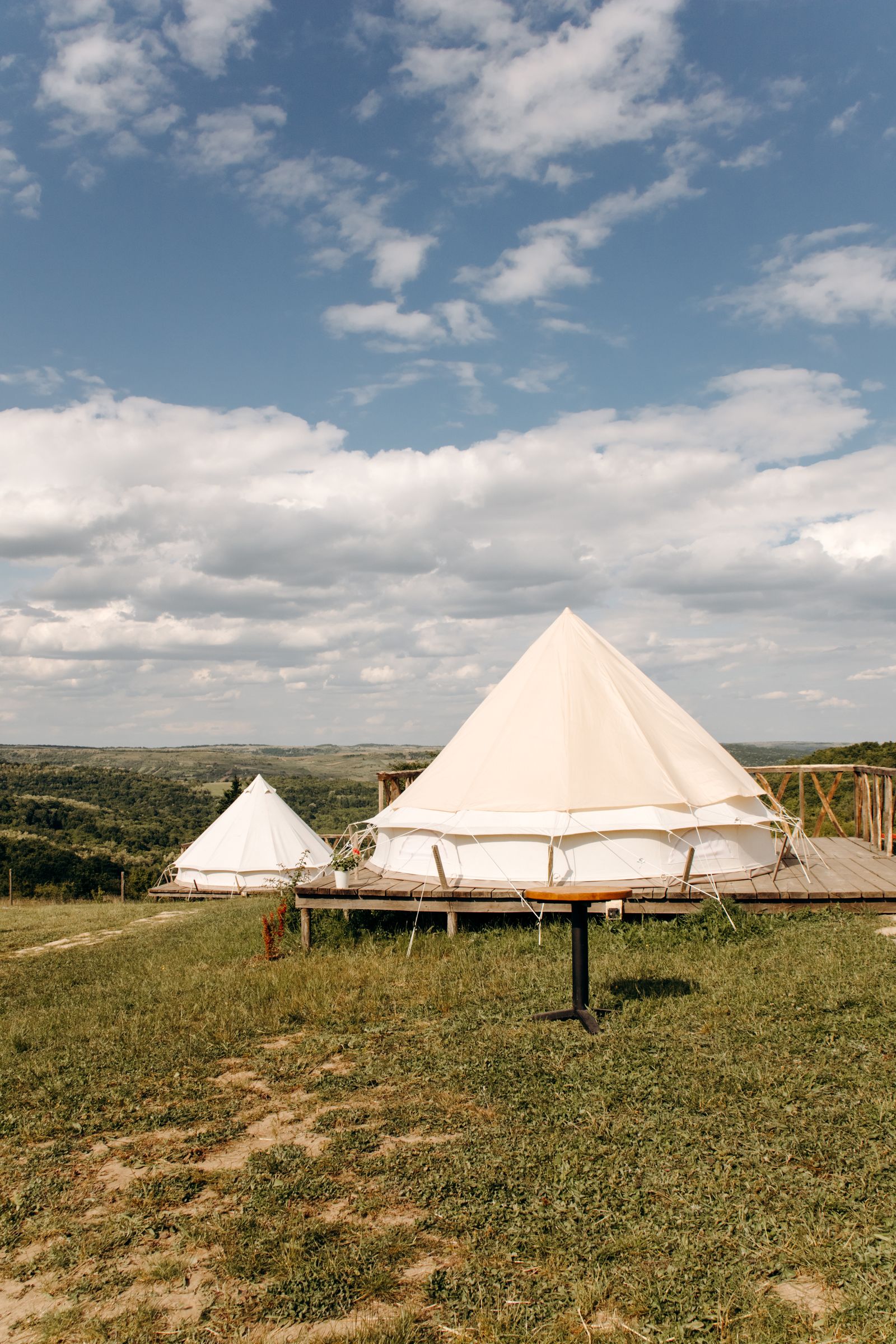
You built something people genuinely want — a cabin in the trees, a dome under a dark sky, a yurt on the back forty. Demand for exactly this kind of stay is climbing: the U.S. glamping market is projected to more than double by 2029. The hard part isn't the stay. It's getting the right people to find it, book it, and come back without handing a third of your revenue to a booking platform every single time.
This is the complete playbook for marketing and growing a glamping or unique-stay business. It's written for the owner-operator: the person who also cleans the cabins, answers the messages, and stocks the firewood. No fluff, no growth-hacking theater — just the levers that actually move bookings, in the order we'd pull them. Each section links to a deeper guide where there's more to say.
By Arthur Khan, Founder · Prairie Rose Solutions
Key Takeaways
- Marketing a unique stay comes down to four levers, in order: own your bookings, get found, convert lookers, and bring guests back.
- Use platforms like Airbnb for discovery, but move guests onto a direct-booking channel you control to stop losing 15–25% to fees.
- Getting found now has two front doors: traditional local search and AI search (GEO) — and the unique-stay category is wide open.
- The cheapest growth there is: a guest email list that re-books past guests direct, at no acquisition cost.
Start with the one number that decides everything: where your bookings come from
Before any tactic, get clear on a single distinction, because it shapes every decision below:
- A platform booking (Airbnb, VRBO) is a guest the platform owns. They found you in their search, they pay their fees, and you may never get the guest's real email.
- A direct booking is a guest you own. They found you, booked on your site, and you can reach them again for free, forever.
Platforms are a fine way to get discovered. They are an expensive way to stay discovered. The goal of everything that follows is simple: use the platforms to get found, then move as many guests as possible onto channels you own.
That's not anti-Airbnb. It's just math — and it's the same instinct that keeps a dollar circulating in a small town instead of leaving for the coast.
The four levers that grow a unique stay
Marketing a stay comes down to four things, in this order of impact:
- Own your bookings — reduce your dependence on platform fees and build a direct channel.
- Get found — show up where guests search, including the new front door: AI search.
- Convert lookers into bookers — photos, story, and pricing that turn a glance into a reservation.
- Bring them back — turn one stay into a relationship, so re-bookings cost you nothing.
Pull them in that order and each one makes the next easier. Let's walk through them.

Lever 1 — Own your bookings (get off the platform treadmill)
Every booking through a major platform can cost you 15–25% once host and guest fees are tallied — Airbnb's host-only fee alone runs about 15.5% — money skimmed off a guest who, often, would happily have booked with you directly. On a $200/night cabin booked 150 nights a year, platform fees can quietly cost you several thousand dollars annually.
A direct-booking channel is the highest-leverage marketing project you can take on. It means:
- A simple booking website of your own, with a real-time calendar and secure checkout.
- A clear reason for guests to book direct — a small discount, a welcome basket, early check-in, whatever fits.
- Automated confirmations and reminders so you're not glued to your phone.
You don't need an enterprise system. A clean site, a booking engine, and a payment processor handle 90% of it, and the fees you stop paying fund the rest of your marketing.
→ Deep dive: Moving Off Airbnb/VRBO to Direct Booking
When you're ready to build the direct-booking side, that's exactly the kind of project we take on — see Marketing Solutions or book a quick consult.
Lever 2 — Get found (including in AI search)
You can't get booked if you can't get found. Visibility has two front doors now, and most operators only watch one.
The old front door: search and maps. When someone types "cabins near [your town]" or "glamping in Iowa," you want to appear. That's local SEO — a complete Google Business Profile, your town and region named clearly on your site, real reviews, and pages that answer the questions travelers actually ask.
The new front door: AI search. A fast-growing share of travelers now plan trips by asking ChatGPT, Perplexity, or Google's AI Overviews things like "where can I find a unique weekend stay within two hours of Omaha?" These tools don't return ten blue links — they name a few options inside the answer. Getting named in that answer is a different discipline called Generative Engine Optimization (GEO), and the unique-stay category is wide open. Most of your competitors don't know it exists yet.
The encouraging part: the things that win at AI search — clear, factual descriptions of what you are and where you are, consistent info across the web, and content that directly answers traveler questions — are things a one-person operation can do as well as anyone.
→ Deep dives: Getting Your Stay Found in AI Search (GEO) and Position Your Stay as an Affordable Staycation for Nearby Metros
This is core to what we do. See GEO and Local SEO if you want help being found.

Lever 3 — Convert lookers into bookers
Getting found is wasted if your listing doesn't close. Two things do most of the converting:
Photos and visual story
For a unique stay, photography is the product. Guests can't visit before they book — your images are the experience. The listings that win lead with a strong hero shot, show the feeling of being there (morning coffee on the deck, string lights at dusk, the view from the bed), and tell a small story rather than just documenting rooms. You don't need a five-figure shoot; you need good light, a clear sequence, and a few moments that make someone picture themselves there.
→ Deep dive: Listing Photography & Visual Storytelling That Converts
Pricing that matches the season and the stay
Unique stays aren't priced like hotel rooms. Demand swings hard with seasons, weekends, and local events, and a flat rate leaves money on the table in peak weeks and empty nights in the shoulder season. Seasonal and dynamic pricing — set thoughtfully, then automated — keeps your calendar full at the right number without you adjusting rates by hand every week.
→ Deep dive: Seasonal & Dynamic Pricing for Unique Stays
Lever 4 — Bring them back (the cheapest growth there is)
The most profitable guest is the one who already loved staying with you. Re-booking a past guest costs a fraction of winning a new one, and it doesn't owe a platform a cent.
The mechanism is a guest email list. Every guest who books — especially every guest you move to direct booking — should join a list you own. Then a few well-timed, genuinely useful emails (a "we're booking up for fall" note, a returning-guest rate, a quiet-week offer) turn one stay into a tradition. Birthdays, anniversaries, the same week every year — unique stays are exactly the kind of place people return to when you remind them.
→ Deep dive: Build a Guest Email List to Re-Book Direct
Capturing and automating that follow-up is a CRM and marketing project we set up once so it runs on its own.
Why this matters beyond your own bottom line
There's a bigger reason to get this right. When a traveler books your stay directly instead of through a distant platform, more of that money stays in your town — it pays your cleaner, your propane supplier, the café where guests grab breakfast. A unique-stay business done well isn't just a good living; it's an engine that keeps rural dollars circulating close to home. That's the part we care most about, and it's worth telling that story as part of your marketing.
→ Read more: Why the Money Stays in the Small Town
Your first 30 days: a simple order of operations
If you do nothing else, do these in order:
- Week 1 — Audit your bookings. Tally what platform fees actually cost you last year. That number is your motivation and your budget.
- Week 2 — Clean up how you're found. Update your Google Business Profile, make sure your town and region are named clearly everywhere, and add one page that answers a real traveler question.
- Week 3 — Stand up a direct-booking path. Even a simple site with a calendar and "book direct and save" gets the flywheel turning.
- Week 4 — Start the list. Capture every guest's email and send one genuine follow-up. That's your re-booking engine, started.
Each step funds and strengthens the next. You don't need to do everything at once — you need to start the loop.
Frequently Asked Questions
How do I market a glamping or unique-stay business?
Marketing a unique stay comes down to four levers, pulled in order: own your bookings (build a direct-booking channel so you stop losing fees to platforms), get found (show up in both traditional local search and AI search), convert lookers into bookers (strong photography and smart seasonal pricing), and bring guests back (a guest email list that re-books past guests directly). Start with direct booking, because every other lever depends on owning the guest relationship.
Is glamping marketing different from regular hotel or Airbnb marketing?
Yes. A unique stay sells an experience and a feeling, not just a room, so visual storytelling carries more weight and guests can't preview it in person before booking. Demand also swings hard with seasons and weekends, which makes dynamic pricing more important. And because the category is newer, there's far less competition for visibility in AI search than in crowded hotel markets.
How do I get more direct bookings instead of paying Airbnb fees?
Keep the platforms for discovery, but convert first-time guests into direct, repeat bookers. Set up a simple booking website with secure payment and automated confirmations, give guests a reason to book direct (a small discount or perk), and capture their email so you can follow up. Over a few seasons your booking mix shifts toward direct, and your margin rises with it.
Can a small or rural unique-stay business compete with bigger operators online?
Yes, especially in AI search. Generative Engine Optimization rewards clear, factual descriptions, consistent business information across the web, and content that answers real traveler questions — things a one-person operation can do as well as anyone. Most competitors don't yet know AI search matters, so moving early lets a small operator own the answer for their area.
Arthur Khan
Founder, Prairie Rose Solutions
Arthur Khan founded Prairie Rose Solutions in Woodbine, Iowa to give rural entrepreneurs the same modern tools as big-city competitors — helping glamping and unique-stay operators own their bookings, get found in search and AI, and bring guests back.
Want a hand putting this in place? Prairie Rose Solutions helps glamping and unique-stay operators across Iowa and the rural Midwest own their bookings, get found in search and AI, and bring guests back — practical systems set up once and built to run on their own. Book a free consult or take our quick client questionnaire, and we'll send back a clear first-step plan for your stay.